The Paddock RV Park
Covered RV sites in Early, Texas. Design, build, ongoing maintenance, and SEO under one relationship — a local business that needed to be findable and trustworthy before it needed to be clever.
- Sector
- Hospitality · Full relationship
- Built on
- Static site
- Our role
- Design · Build · Maintenance · SEO
- Live site
- paddockrvpark.com ↗
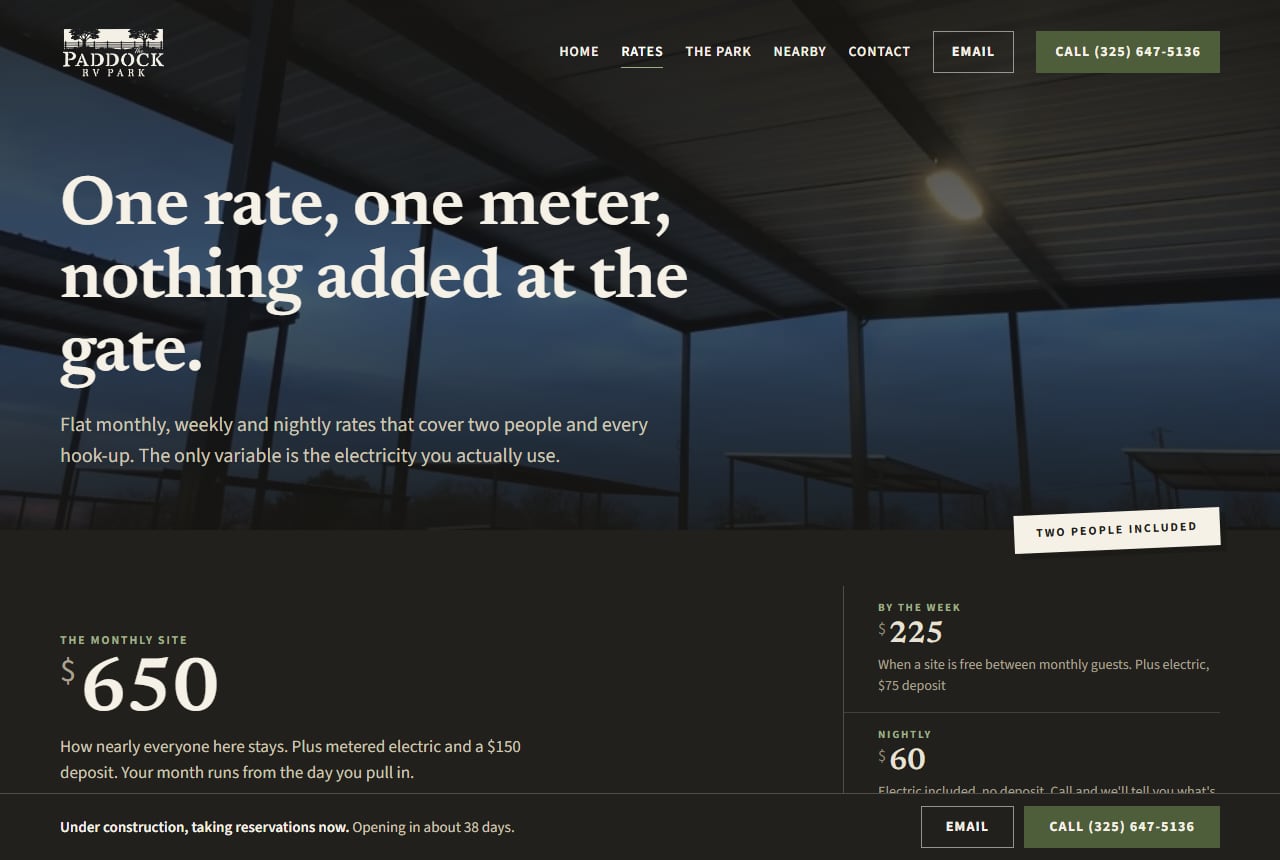
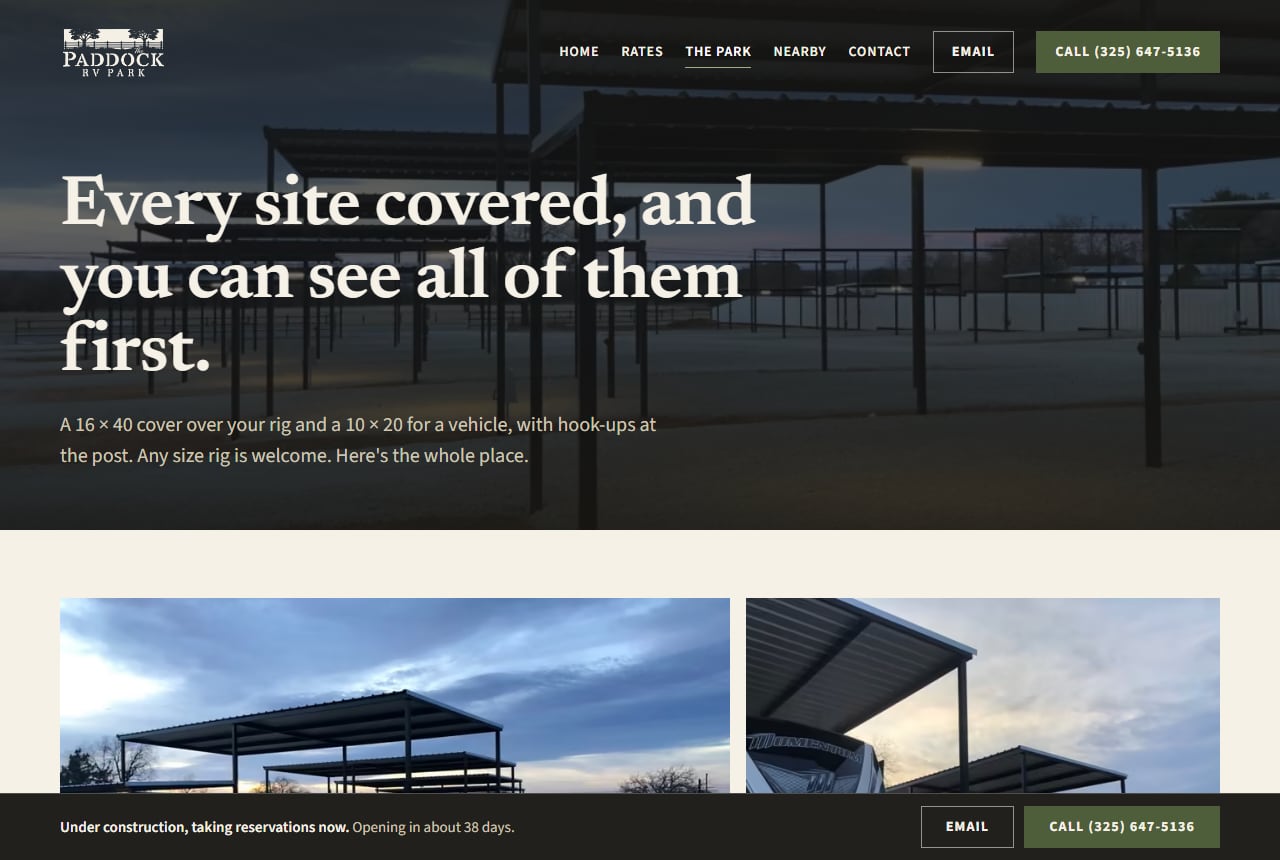
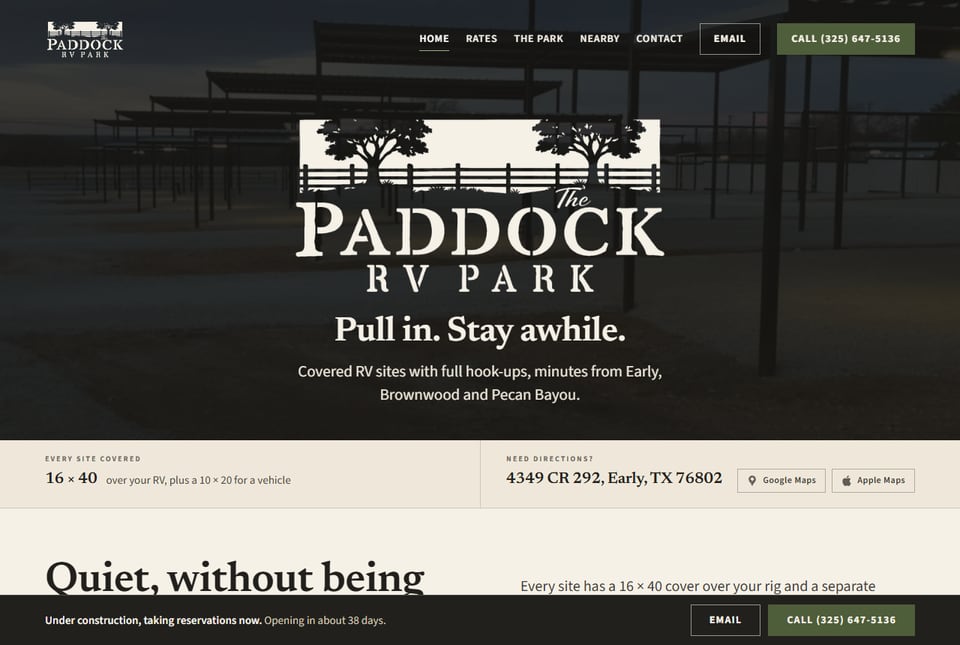
The Paddock RV Park rents covered RV sites with full hook-ups in Early, Texas — nightly, weekly, and monthly. It’s a local business serving a local area, and that shapes every decision on the site. Nobody’s browsing. They’re driving toward Brownwood with a fifth-wheel behind them, and they want to know three things: will my rig fit, what does it cost, and can I call someone.
The approach
Local businesses usually get handed one of two things: a page on a directory site they don’t control, or a heavy template where the photo gallery takes eight seconds to load out on the highway. Neither one works for a customer deciding in a parking lot on one bar of signal.
So the site is static. No CMS, no database, no plugin surface to keep patched. Nine pages — the park, rates, monthly stays, what’s nearby, contact, plus the legal and accessibility pages — each answering a question a guest actually asks. The headings are written the way the owner talks: “We can accommodate any size rig.” “No surprises at the gate.”
What that meant technically
- Structured data for a physical place.
LocalBusinessmarkup withGeoCoordinates,PostalAddress,LocationFeatureSpecificationfor the amenities, andOfferwithUnitPriceSpecificationfor the nightly, weekly, and monthly rates. That’s what lets a search engine answer “RV park near Brownwood with covered sites” without the visitor ever reaching the site. - Self-hosted fonts. Two families, Latin subset only, served from the same origin — no third-party round trip before the first line of text renders.
- Responsive WebP photography. The park sells on its photos, so they had to be good and small. Multiple widths per image, modern format.
- Fingerprinted assets. Hashed CSS filenames, so caching can be set to a year and a change still lands right away.
- An accessibility page, and a
robots.txtthat states content signals for AI crawlers — both things a small business increasingly gets asked about.
Static, but not stale
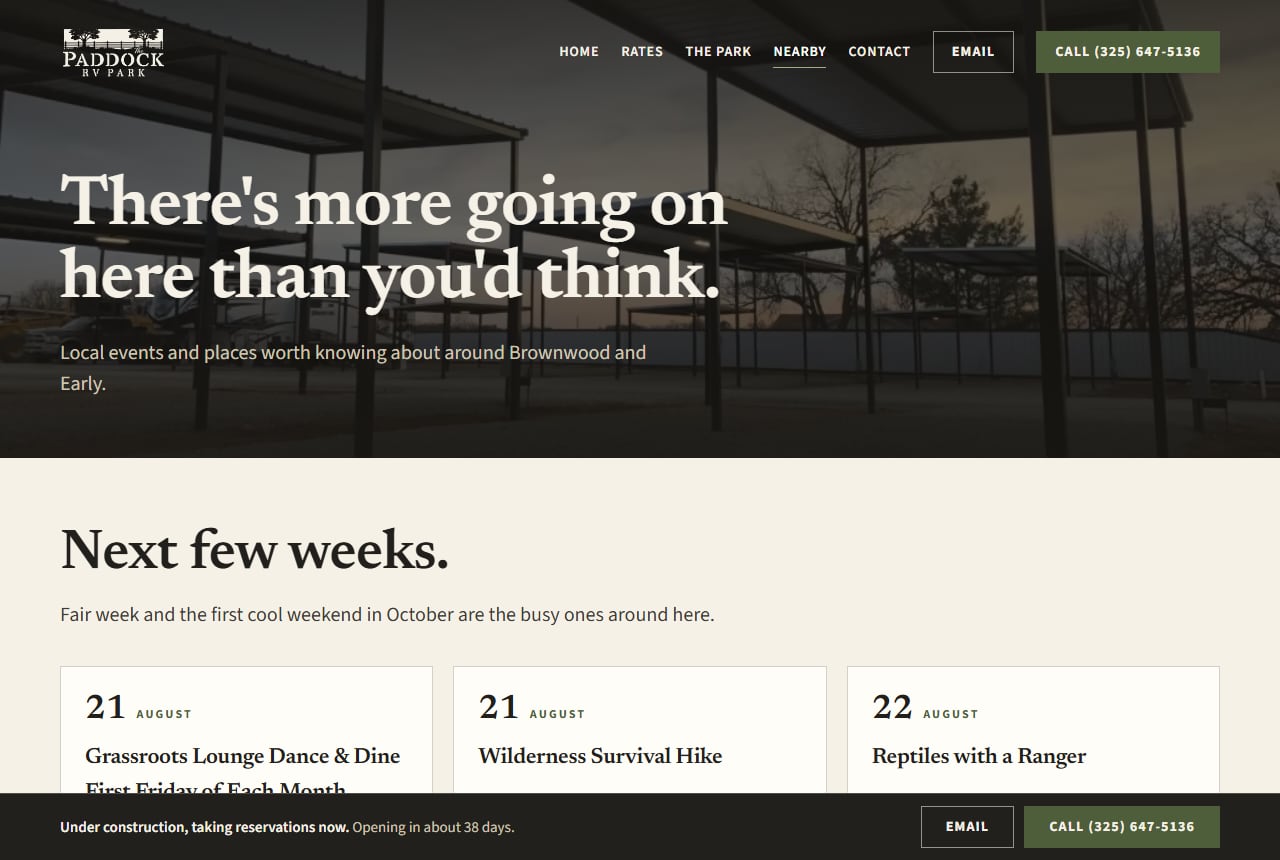
The usual knock on a static site is that somebody has to remember to update it. The Nearby page is our answer to that.
It scrapes the local chamber of commerce and city sites for events and places worth knowing about — the kind of thing someone parked for a month would actually go do — and lays them out as a calendar. The whole thing rebuilds daily. The owner never touches it, and it’s never showing last month’s county fair.
Because the events get baked into the HTML instead of fetched in the browser, the page still loads instantly, and search engines see real content rather than an empty shell waiting on JavaScript. It’s the useful half of a CMS — content that stays current — without the database, the logins, or the update treadmill.
It earns its keep for search, too. A page about local events and attractions gives the site something to rank for beyond the park’s own name, which matters a lot for a business nobody is searching for by name yet.
The ongoing part
This isn’t a build-and-invoice project. We designed it, we built it, and we keep it running — maintenance and SEO on a continuing basis. For a business whose next booking might come from a single local search, the work after launch matters more than the launch.
What we’re measuring
The site went live in August 2026, and the park itself hasn’t opened yet — as of this writing it’s still under construction, taking reservations, with a pinned bar counting down to opening day. So there’s nothing honest to report yet, and there couldn’t be: a local business doesn’t rank overnight, and this one doesn’t even have guests through the gate.
That’s the useful part. The site exists to capture demand before opening, and we’re three months into a defined plan. Here’s what we’ll report against once there’s real data:
- Local visibility for the searches that actually convert — covered RV sites near Brownwood, monthly RV rates in Early, and the park by name.
- Search Console impressions and clicks, measured from launch as the baseline rather than against a site that didn’t exist.
- Calls and inquiries the site can be credited with, which for this business matters more than sessions.
We’ll update this page with the numbers once the data is meaningful rather than just available.